Within Kecksburg
Why Moon Dust Matters to Kecksburg
Project Moon Dust matters because it shows why unusual fallen objects could interest the military during the space age.
On this page
- What recovery programs sought
- Why debris had intelligence value
- How context differs from proof
Page outline Jump by section
Introduction
Project Moon Dust matters to Kecksburg because it proves a narrow but important point: during the Cold War space age, the United States did have organised procedures for locating, examining, and sometimes discreetly recovering fallen space hardware. That does not prove that the object reported near Kecksburg on 9 December 1965 was recovered by Moon Dust, or that it was a Soviet satellite, a secret American vehicle, or anything exotic. It does, however, make the military-interest part of the Kecksburg story historically plausible in a way that a simple “why would anyone care about falling debris?” objection misses.
The best use of Moon Dust in the Kecksburg debate is contextual, not conclusive. Declassified State Department material shows US concern with recovered space fragments, foreign ownership, intelligence value, diplomatic handling, and public messaging. NASA-related “fragology” records show a parallel civilian-technical interest in identifying recovered space-object fragments. Together, these records explain why an unusual fallen object in 1965 could have drawn official attention — while also showing why that context must not be mistaken for proof that Kecksburg was a documented Moon Dust recovery.[governmentattic.org]governmentattic.orgProjMoondust1967 1972ProjMoondust1967 1972
What Moon Dust Was Trying to Recover
“Project Moon Dust” is the common public name for a US Air Force-linked Cold War recovery effort concerned with foreign space debris and other unusual fallen objects. A 2024 discussion by space journalist Leonard David notes a useful correction from a source familiar with the material: in some official usage it was apparently just “Moon Dust”, not necessarily “Project Moon Dust”. The distinction is minor for most readers, but it matters because the surviving paper trail is fragmentary and terminology varies across later FOIA releases, secondary writing, and UFO literature.[leonarddavid.com]leonarddavid.comSecretive Moon Dust Details RevealedSecretive Moon Dust Details Revealed
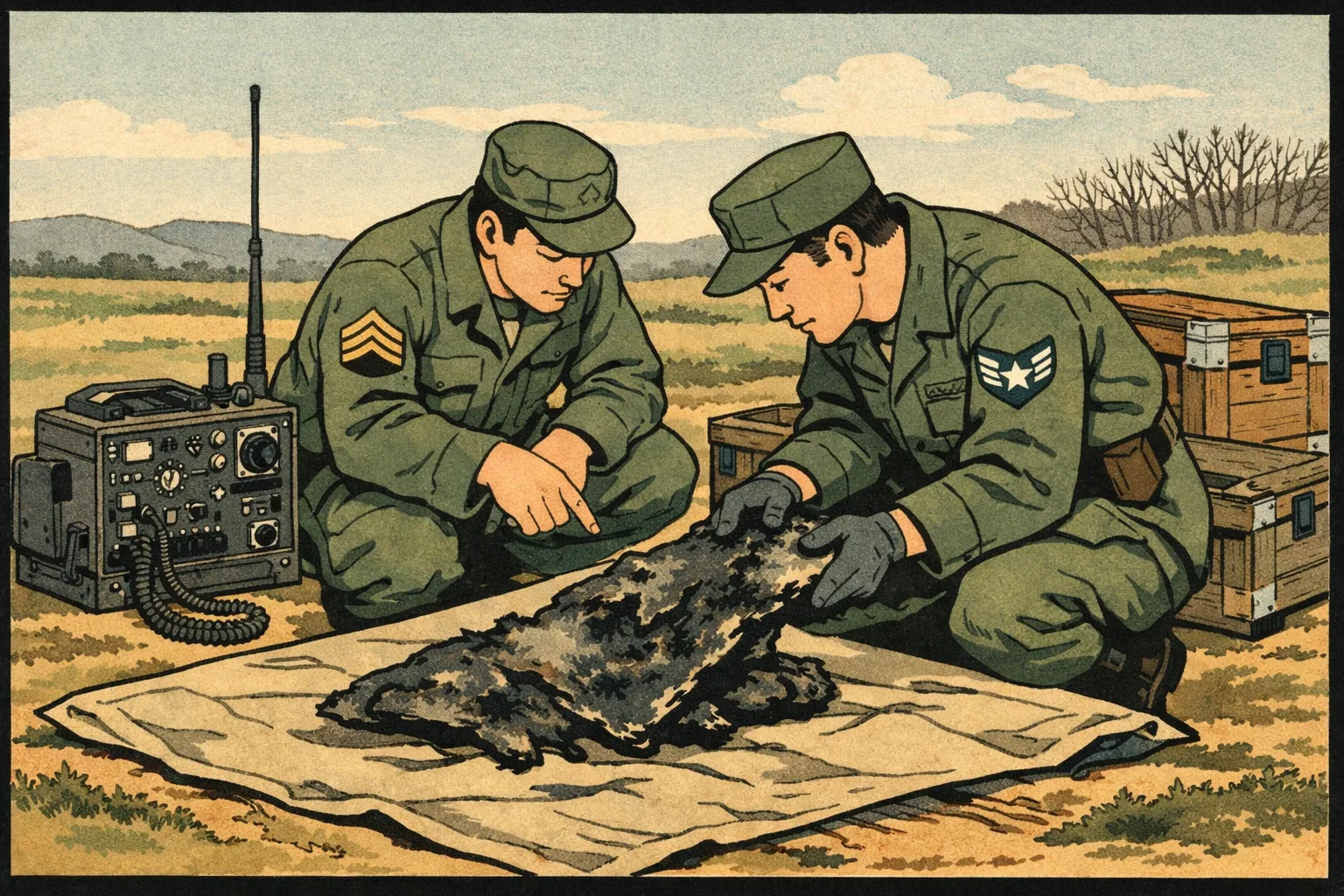
The practical mission was not mysterious in its basic outline. US agencies wanted to locate, recover, examine, and identify hardware that had survived re-entry, especially foreign space hardware. During the 1960s and early 1970s, that usually meant Soviet satellites, rocket stages, tanks, casings, or fragments that fell in the United States or in countries friendly enough to co-operate with US diplomats, military attachés, NASA specialists, or intelligence-linked technical teams. Declassified State Department communications describe “Recovery of Deorbited Space Debris (Moon Dust), 1967–1972” and include cases involving Nepal, Mexico, New Zealand, the United Kingdom, and Soviet Cosmos satellite fragments recovered in the American Midwest.[governmentattic.org]governmentattic.orgProjMoondust1967 1972ProjMoondust1967 1972
That scope is why Moon Dust appears in Kecksburg discussions. Kecksburg involved a dramatic fireball, reports of something landing, claims of official search activity, and later allegations that a large object was removed. If any physical object had been recovered there, it would have fallen into the same broad category that Moon Dust and related “fragology” work cared about: not “UFO” as a pop-culture label, but unidentified or foreign-origin material that might reveal useful technical information.[The Black Vault]theblackvault.comthe vault files the 1965 kecksburg pennsylvania crashthe vault files the 1965 kecksburg pennsylvania crash
Why Fallen Debris Had Intelligence Value
Space debris was not just rubbish. In the Cold War, a fragment of a satellite, probe, or rocket could be a rare physical sample of another country’s engineering. Even damaged, burnt, or incomplete pieces could reveal alloys, manufacturing methods, heat-shield behaviour, fasteners, electronics packaging, fuel-system design, insulation, markings, or structural choices. That is why official documents did not treat every recovered fragment as a curiosity for museums; some were handled as material of technical and diplomatic value.
The State Department’s 1972 handling of fragments from Soviet Cosmos 316 makes this clear. Six fragments were recovered after the satellite broke up and fell across the US Midwest on 28 August 1970. The US notified the UN Secretary-General and the Soviet Embassy, offered opportunities for Soviet representatives to inspect and claim the fragments, and later considered how and when to put them on public display. The same memorandum noted that the largest fragment was roughly four feet by four feet and weighed 640 pounds — large enough to make clear that re-entering space hardware could survive in substantial pieces, not merely as specks or ash.[governmentattic.org]governmentattic.orgProjMoondust1967 1972ProjMoondust1967 1972
The same file explains how such fragments could be identified. Officials referred to examination of manufacturers’ markings and numbers, bolts, threads, component configuration, design, alloys, and time-and-trajectory evidence. They also acknowledged that not all identification techniques could be publicly revealed for security reasons. For Kecksburg, this is a key contextual point: a recovered object did not need to be alien, intact, or spectacular to become sensitive. If it was suspected foreign space hardware, it could interest military, intelligence, diplomatic, and NASA-linked technical personnel at the same time.[governmentattic.org]governmentattic.orgProjMoondust1967 1972ProjMoondust1967 1972
How Recovery Worked in Practice
Moon Dust-style work sat between several worlds: field reporting, diplomacy, military logistics, technical analysis, and space law. It was not simply a team rushing into woods with a tarpaulin. The available documents show embassies receiving reports, host governments deciding whether to co-operate, NASA specialists being arranged for examinations, military or defence channels moving samples, and Washington officials weighing how much to say publicly.
The Mexico material is a good example. In 1967, US diplomatic cables discussed a possible space object reported in Chiapas and a separate suspected fragment in Mexico. The records mention a NASA official, Leo Abernethy, travelling to examine a suspected fragment, and Mexican officials arranging custody and examination. This was ordinary bureaucratic work, but it was also time-sensitive and politically delicate: the object moved between local, state, national, consular, and technical hands.[governmentattic.org]governmentattic.orgProjMoondust1967 1972ProjMoondust1967 1972
The New Zealand case shows why “debris recovery” could become more than housekeeping. A 1972 Moon Dust cable said extensive laboratory study of space-object samples had begun, that a classified report was expected in about six months, and that the objects were of greater interest than originally estimated. That phrasing is important. It shows that recovered fragments could grow in significance after examination, and that the results could be classified even when the fact of a recovery was not necessarily secret.[governmentattic.org]governmentattic.orgProjMoondust1967 1972ProjMoondust1967 1972
Nepal adds the international-law layer. The State Department file includes communications about metallic pieces discovered in Nepalese territory believed to be parts of an object launched into space, and later references a “Moon Dust/Space Fragments: Nepal” message about returning a restored fragment. These were not only technical objects; they were also legally and diplomatically awkward objects, because ownership and return obligations depended on whether a launching state could be identified and whether it chose to claim the material.[governmentattic.org]governmentattic.orgProjMoondust1967 1972ProjMoondust1967 1972
Why Space Law Made Debris Politically Sensitive
By the late 1960s, fallen space hardware was covered by an emerging international legal framework. The 1967 Outer Space Treaty states that ownership of space objects and their component parts is not affected by their return to Earth. The 1968 Rescue Agreement further provides that states should assist in recovering space objects that return outside the launching state’s territory and return or hold them at the disposal of the launching authority upon request.[UNOOSA]unoosa.orgOpen source on unoosa.org.
That legal setting helps explain the cautious tone of the Cosmos 316 documents. US officials wanted to show that “national means” were adequate for identifying space objects, but they also did not want to reveal sensitive identification techniques or provoke unnecessary controversy at the United Nations. The State Department memo proposed displaying the fragments at the Smithsonian’s National Air and Space Museum and the Air Force Museum at Wright-Patterson Air Force Base, while retaining legal custody rights and controlling the exact display wording.[governmentattic.org]governmentattic.orgProjMoondust1967 1972ProjMoondust1967 1972
For Kecksburg, the lesson is not that all secrecy implies a cover-up. It is that space debris could be sensitive for ordinary state reasons: intelligence exploitation, treaty obligations, public messaging, relations with the Soviet Union, and legal uncertainty over ownership. A recovered fragment could therefore generate secrecy even if it was exactly what officials said many UFO reports were not: mundane space hardware rather than an extraterrestrial craft.[governmentattic.org]governmentattic.orgProjMoondust1967 1972ProjMoondust1967 1972
Where NASA “Fragology” Fits
Kecksburg debates often mention NASA because of the later fight over missing records. NASA was not the Air Force’s UFO-investigation office, but it had relevant technical expertise. The term “fragology” has been used for NASA files concerning recovery and analysis of space-object fragments, including attempts to determine national ownership and vehicle origin. The Black Vault’s summary of the released NASA-related material describes the fragology files as reports on space-object recovery and fragment analysis, covering roughly the period in which Kecksburg occurred.[The Black Vault]theblackvault.comthe vault files the 1965 kecksburg pennsylvania crashthe vault files the 1965 kecksburg pennsylvania crash
This matters because Kecksburg occurred in December 1965, inside the approximate period associated with those records. If recovered fragments from the Kecksburg area were ever examined as possible space debris, NASA expertise would not have been surprising. That is different from saying NASA proved a satellite landed at Kecksburg. The available public record is more frustrating: NASA reportedly acknowledged in the 2000s that experts had examined metallic fragments from the area and concluded they were from a Soviet satellite, but the supporting records were missing or destroyed, leaving the claim difficult to verify.[The Black Vault]theblackvault.comthe vault files the 1965 kecksburg pennsylvania crashthe vault files the 1965 kecksburg pennsylvania crash
The 2003–2007 FOIA lawsuit brought by journalist Leslie Kean sharpened this issue. Reporting by the Reporters Committee for Freedom of the Press stated that after years of dispute, NASA agreed to conduct a more extensive search for records relating to the alleged 1965 Kecksburg landing and pay about $50,000 in attorney’s fees and costs. Space.com later reported that the resulting search produced no “smoking gun”, but did raise unresolved questions about missing or destroyed files and the role of Moon Dust-style space-object recovery work.[Reporters Committee]rcfp.orgOpen source on rcfp.org.
What This Context Adds to Kecksburg
Moon Dust changes the Kecksburg discussion in three useful ways.
First, it makes official interest plausible. A large, unusual, possibly artificial object falling from the sky in 1965 would have landed in the middle of the space race, not in a neutral technological environment. If witnesses or local authorities reported a crash-like event, officials would have had reasons to investigate that did not require belief in aliens.[Space]space.com7589 case finally closed 1965 pennsylvania ufo mystery7589 case finally closed 1965 pennsylvania ufo mystery
Second, it shows that secrecy could have ordinary causes. Intelligence value, foreign ownership, treaty obligations, and Cold War diplomacy could all justify controlled handling of fallen hardware. The Cosmos 316 files show officials delaying public treatment of recovered fragments, planning careful wording, and worrying about UN discussions, even though the material was ultimately destined for public display.[governmentattic.org]governmentattic.orgProjMoondust1967 1972ProjMoondust1967 1972
Third, it gives a concrete alternative to the false choice between “meteor” and “alien craft”. The Kecksburg fireball may still be best explained as a meteor-like bolide in the sky, and no verified object from Kecksburg has been produced. But the wider recovery context shows why some researchers focus on space debris, foreign hardware, or classified domestic technology rather than treating extraterrestrial visitation as the only non-meteor option.[Space]space.com7589 case finally closed 1965 pennsylvania ufo mystery7589 case finally closed 1965 pennsylvania ufo mystery
What Moon Dust Does Not Prove
The strongest caution is simple: Moon Dust’s existence does not prove Moon Dust recovered anything at Kecksburg. The known documents establish that US agencies recovered and analysed fallen space hardware in other cases, and that NASA-related records on fragment analysis are relevant to the Kecksburg paper trail. They do not provide a verified chain of custody for an object from Kecksburg, a laboratory report identifying such an object, or a surviving official inventory showing that a Kecksburg artefact entered Moon Dust or any related programme.[The Black Vault]theblackvault.comthe vault files the 1965 kecksburg pennsylvania crashthe vault files the 1965 kecksburg pennsylvania crash
Nor does Moon Dust overturn the meteor explanation for the broad regional event. The Kecksburg incident began with a widely seen fireball over parts of the United States and Canada. A recovery programme can explain why officials might investigate reported debris, but it cannot by itself establish that debris actually landed in the Pennsylvania woods. That distinction is essential: a real programme plus a real fireball does not automatically equal a recovered spacecraft.[Space]space.com7589 case finally closed 1965 pennsylvania ufo mystery7589 case finally closed 1965 pennsylvania ufo mystery
It also does not erase the difference between UFO investigation and space-debris exploitation. The Air Force’s Project Blue Book records are a separate public archive of UFO reports, and the official Air Force position after Blue Book’s closure was that it had found no evidence that unidentified sightings represented extraterrestrial vehicles or technology beyond known science. Moon Dust belongs more precisely to the recovery-and-analysis context: what governments do when physical material may have fallen, not what they conclude about every unexplained light in the sky.[National Archives]archives.govNational Archives Project BLUE BOOKNational Archives Project BLUE BOOK
The Best Reading for Kecksburg
The careful conclusion is that Moon Dust is a context amplifier, not a solution. It makes the Kecksburg recovery claims more historically intelligible because US agencies really did care about fallen space objects, sometimes handled them quietly, and sometimes treated them as technically valuable. It also explains why later researchers searched NASA and State Department records rather than relying only on local testimony or UFO folklore.[governmentattic.org]governmentattic.orgProjMoondust1967 1972ProjMoondust1967 1972
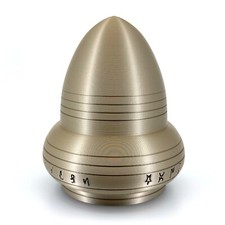
At the same time, Moon Dust narrows rather than expands what can responsibly be claimed. It supports the idea that a suspected space-debris incident in 1965 could have attracted military or NASA-linked attention. It does not supply the missing Kecksburg object, does not identify the alleged acorn-shaped craft, and does not prove an extraterrestrial recovery. The most defensible role of Moon Dust in the Kecksburg story is therefore comparative: it shows what the US government was capable of doing with unusual fallen hardware during the space age, while leaving the specific Kecksburg recovery claim unresolved.

Amazon book picks
Further Reading
Books and field guides related to Why Moon Dust Matters to Kecksburg. Use these as the next step if you want deeper reading beyond the article.
The NASA Conspiracies
Explores space-age secrecy themes that overlap with Moon Dust discussions.
UFOs and the National Security State
Places Moon Dust-era programs within broader national-security concerns.
eBay marketplace picks
Marketplace Samples
Example marketplace items related to this page. Use the search link to explore similar finds on eBay.

Endnotes
1.
Source: governmentattic.org
Title: ProjMoondust1967 1972
Link:https://www.governmentattic.org/54docs/ProjMoondust1967-1972.pdf
2.
Source: space.com
Title: 7589 case finally closed 1965 pennsylvania ufo mystery
Link:https://www.space.com/7589-case-finally-closed-1965-pennsylvania-ufo-mystery.html
3.
Source: leonarddavid.com
Title: Secretive Moon Dust Details Revealed
Link:https://www.leonarddavid.com/secretive-project-moon-dust-details-revealed/
4.
Source: unoosa.org
Link:https://www.unoosa.org/oosa/en/ourwork/spacelaw/treaties/outerspacetreaty.html
5.
Source: unoosa.org
Link:https://www.unoosa.org/oosa/en/ourwork/spacelaw/treaties/rescueagreement.html
6.
Source: archives.gov
Title: National Archives Project BLUE BOOK
Link:https://www.archives.gov/research/military/air-force/ufos
7.
Source: unoosa.org
Link:https://www.unoosa.org/oosa/en/treatyimplementation/arra-art-v/unlfd.html
8.
Source: unoosa.org
Link:https://www.unoosa.org/oosa/en/SpaceLaw/rescue.html
9.
Source: history.state.gov
Link:https://history.state.gov/historicaldocuments/frus1961-63v25/d362
10.
Source: 2009-2017.state.gov
Link:https://2009-2017.state.gov/t/isn/5181.htm
11.
Source: youtube.com
Title: Project Moon Dust | Episode 8 | The Secret UFO Retrieval Program
Link:https://www.youtube.com/watch?v=uKAT4yK_AyY
Source snippet
2 The Kecksburg Incident: What Really Happened Here?...
12.
Source: theblackvault.com
Title: the vault files the 1965 kecksburg pennsylvania crash
Link:https://www.theblackvault.com/casefiles/the-vault-files-the-1965-kecksburg-pennsylvania-crash/
13.
Source: documents2.theblackvault.com
Title: The Black Vault
Link:https://documents2.theblackvault.com/documents/nasa/21-HQ-F-00500.pdf
14.
Source: rcfp.org
Link:https://www.rcfp.org/judge-forces-nasa-take-giant-leap-foia-suit/
15.
Source: Wikipedia
Title: Project Moon Dust
Link:https://en.wikipedia.org/wiki/Project_Moon_Dust
16.
Source: reddit.com
Title: Project Moon Dust
Link:https://www.reddit.com/r/UFOs/comments/11db49s/project_moon_dust_the_covert_crash_retrieval/
17.
Source: reddit.com
Title: Project Moon Dust
Link:https://www.reddit.com/r/UFOs/comments/19ewxw0/project_moon_dust_a_dive_into_records_of_a_ufo/
18.
Source: documents.theblackvault.com
Link:https://documents.theblackvault.com/documents/ufos/UK/defe-24-2025-1-1.pdf
19.
Source: assets.publishing.service.gov.uk
Link:https://assets.publishing.service.gov.uk/media/5a7c3d31e5274a1b004226b7/Treaty_Principles_Activities_Outer_Space.pdf
20.
Source: thedebrief.org
Title: project moon dust
Link:https://thedebrief.org/project-moon-dust/
21.
Source: theguardian.com
Link:https://www.theguardian.com/world/2007/nov/11/spaceexploration.usa
22.
Source: sppl.umd.edu
Title: space debris
Link:https://sppl.umd.edu/projects/space-debris/
Additional References
23.
Source: youtube.com
Link:https://www.youtube.com/watch?v=odUSnDgU-oo
Source snippet
4 The Mysterious 1965 UFO Crash | Beyond Skinwalker Ranch (S3) | History...
24.
Source: youtube.com
Link:https://www.youtube.com/watch?v=Ac3hYt3k-Eo
Source snippet
5 UFO Evidence Hidden in Kecksburg? | UFO Witness | Discovery Channel...
25.
Source: youtube.com
Title: The Kecksburg Incident: What Really Happened Here?
Link:https://www.youtube.com/watch?v=BXh2zTD9Kug
Source snippet
3 America's Other Roswell: the Kecksburg UFO | Conspiracy (S1, E13) | Full Episode | History...
26.
Source: cia.gov
Link:https://www.cia.gov/library/abbottabad-compound/4A/4A92FD2FB4DAE3F773DB0B7742CF0F65_Coleman.-.CONSPIRATORS.HIERARCHY.-.THE.STORY.OF.THE.COMMITTEE.OF.300.R.pdf
27.
Source: cia.gov
Link:https://www.cia.gov/library/abbottabad-compound/FC/FC2F5371043C48FDD95AEDE7B8A49624_Springmeier.-.Bloodlines.of.the.Illuminati.R.pdf
28.
Source: cia.gov
Link:https://www.cia.gov/library/abbottabad-compound/F6/F693879994199D612C64EE9A4666E8EE_Crossing_The_Rubicon_Part_1.pdf
29.
Source: cia.gov
Link:https://www.cia.gov/library/abbottabad-compound/3F/3FF4DC9233E6C8EF4A05FCDF054A7344foreign_policy-_mar-apr-08.pdf
30.
Source: cia.gov
Link:https://www.cia.gov/library/abbottabad-compound/13/130AEF1531746AAD6AC03EF59F91E1A1_Killing_Hope_Blum_William.pdf
31.
Source: cia.gov
Link:https://www.cia.gov/library/abbottabad-compound/FC/FC8AEB056C2C32F10AFC327BA91F4A45_The_Bohemian_Grove_and_Other_Retreats.rtf.pdf
32.
Source: cia.gov
Link:https://www.cia.gov/library/abbottabad-compound/B6/B6F34679EE907C8E686332BC86EAE89B_doctrine03_US.pdf
Topic Tree